
A gate controller (or control board) is the central “brain” of an automated gate system. It is an electronic circuit board that processes commands from entry devices, manages safety sensors, and tells the gate motor exactly when, how far, and at what speed to open or close.
How it Works
The controller acts as the central hub of the automation system through the following process:
- Receiving Inputs: It receives signals from your access methods, such as remote controls, smartphone apps, keypads, or intercoms.
- Checking Safety: Before moving, it checks signals from safety devices like infrared photocells or safety loops to ensure there are no vehicles or people blocking the gate’s path.
- Triggering the Motor: If the path is clear, it sends electrical power and instructions to the gate operator (the motor/actuator) to slide or swing the gate open or closed.
Core Functions
- Motor Control: Regulates the speed, adjusts the force, and manages “soft start/stop” functions so the gate doesn’t slam.
- Auto-Close: Can be configured to automatically close the gate after a set number of seconds.
- Pedestrian Mode: Opens the gate only partially (e.g., just enough for a person to walk through rather than a car).
The Broader Ecosystem
While “gate controller” specifically refers to the electronic circuit board, the term is often used interchangeably with the broader control ecosystem, which includes:
- The Gate Operator (Motor): The physical motor that physically moves the gate.
- Access Control: Devices that trigger the controller for smart devices or standalone RFID/intercom systems).
- Safety Sensors: Devices that send signals back to the controller to prevent accidents.
-
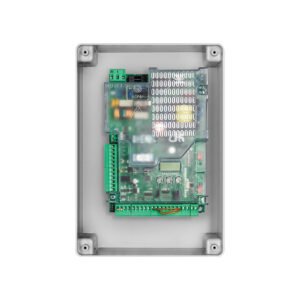 Access Control
Beninca B-TRUST24
Read moreBeninca B-TRUST24 24VDC Controller with integrated receiver and battery charger (64 Remote Slots) – Used For Swing Gate Automation

-
 Access Control
Beninca B-BRAINY24+
Read moreBeninca B-BRAINY24+ 24VDC Controller with integrated receiver and battery charger (64 Remote Slots) – Used For Swing Gate Automation