
- Multi-Application Storage: The cards come in different memory sizes (e.g., 2k, 16k, or 32k bits) which allows multiple, securely separated files to exist on a single card.
- Beyond the Door: In addition to building access, the cards can be configured for biometric authentication, public transportation ticketing, network log-ons, and loyalty programs.
- Multi-Technology Options: iCLASS chips can be combined with other technologies on a single card, such as magnetic stripes, barcodes, or older 125 kHz HID Proximity (Prox) chips, allowing organizations to easily upgrade their legacy systems.
- Standard Prox: The original legacy format. It transmits data in an unencrypted format, making it vulnerable to cloning or skimming.
- Standard iCLASS: Introduced cryptographic data transfer and read/write capabilities.
- iCLASS SE / Seos: An evolutionary upgrade featuring more advanced multi-layered security, end-to-end encryption, and compatibility with mobile devices.
-
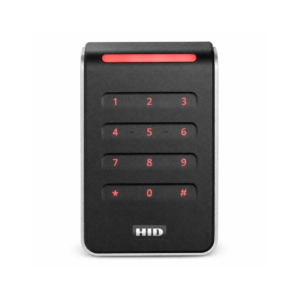 Access Control
HID 40KNKS-00-000000
Read moreHID Global 40KNKS-00-000000 Signo Access Control Keypad Multi-Tech Standard-Profile (SEOS / iClASS SE / iClASS SR / iClASS / MIfae Desfire EV1/EV2 (SIO) / Mifare Classic / HID Prox / Indala / EM Prox) Reader – (IP65-Rated) Weatherproof & Tamper-proof – Black Bezel – Integred Keypad – Secure Mobile ID via NFC / Bluetooth – Supports OSDP (Open Supervised Device Protocol)
-
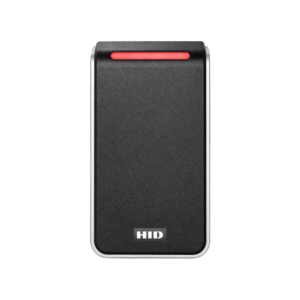 Access Control
HID 40NKS-00-000000
Read moreHID Global 40NKS-00-000000 Signo Access Control Multi-Tech Standard-Profile (SEOS / iClASS SE / iClASS SR / iClASS / MIfae Desfire EV1/EV2 (SIO) / Mifare Classic / HID Prox / Indala / EM Prox) Reader – (IP65-Rated) Weatherproof & Tamper-proof – Black Bezel – Secure Mobile ID via NFC / Bluetooth – Supports OSDP (Open Supervised Device Protocol)
-
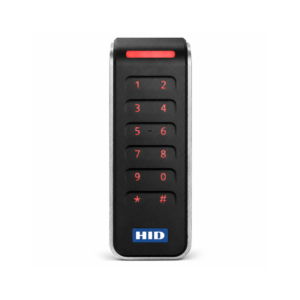 Access Control
HID 20KNKS-00-000000
Read moreHID Global 20KNKS-00-000000 Signo Access Control Keypad Multi-Tech Standard-Profile (SEOS / iClASS SE / iClASS SR / iClASS / MIfae Desfire EV1/EV2 (SIO) / Mifare Classic / HID Prox / Indala / EM Prox) Reader – (IP65-Rated) Weatherproof & Tamper-proof – Slimline – Mullion Style – Black Bezel – Integred Keypad – Secure Mobile ID via NFC / Bluetooth – Supports OSDP (Open Supervised Device Protocol)
-
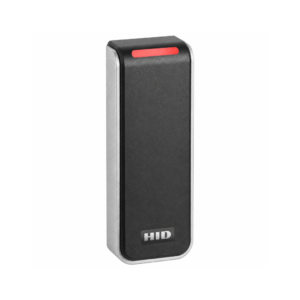 Access Control
HID 20NKS-00-000000
Read moreHID Global 20NKS-00-000000 Signo Access Control Multi-Tech Standard-Profile (SEOS / iClASS SE / iClASS SR / iClASS / MIfae Desfire EV1/EV2 (SIO) / Mifare Classic / HID Prox / Indala / EM Prox) Reader – (IP65-Rated) Weatherproof & Tamper-proof – Slimline – Mullion Style – Black Bezel – Secure Mobile ID via NFC / Bluetooth – Supports OSDP (Open Supervised Device Protocol)
-
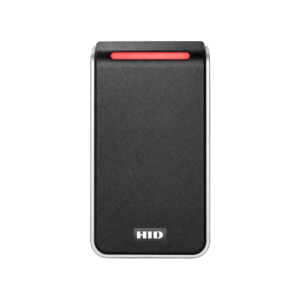 Access Control
HID 40NKS-02-000000
Read moreHID Global 40NKS-02-000000 Signo Access Control Multi-Tech Smart-Profile (SEOS / iClASS SE / iClASS SR / iClASS / MIfae Desfire EV1/EV2 (SIO) / Mifare Classic) Reader – (IP65-Rated) Weatherproof & Tamper-proof – Black Bezel – Secure Mobile ID via NFC / Bluetooth – Supports OSDP (Open Supervised Device Protocol)
-
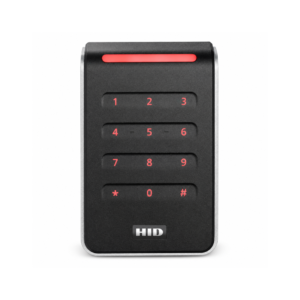 Access Control
HID 40KNKS-02-000000
Read moreHID Global 40KNKS-02-000000 Signo Access Control Keypad Multi-Tech Smart-Profile (SEOS / iClASS SE / iClASS SR / iClASS / MIfae Desfire EV1/EV2 (SIO) / Mifare Classic) Reader – (IP65-Rated) Weatherproof & Tamper-proof – Black Bezel – Integred Keypad – Secure Mobile ID via NFC / Bluetooth – Supports OSDP (Open Supervised Device Protocol)
-
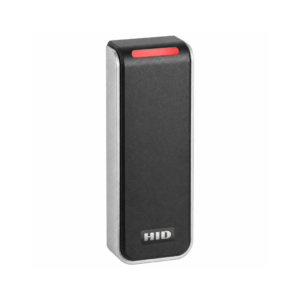 Access Control
HID 20NKS-02-000000
Read moreHID Global 20NKS-02-000000 Signo Access Control Multi-Tech Smart-Profile (SEOS / iClASS SE / iClASS SR / iClASS / MIfae Desfire EV1/EV2 (SIO) / Mifare Classic) Reader – (IP65-Rated) Weatherproof & Tamper-proof – Slimline – Mullion Style – Black Bezel – Secure Mobile ID via NFC / Bluetooth – Supports OSDP (Open Supervised Device Protocol)
-
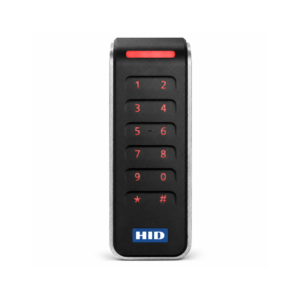 Access Control
HID 20KNKS-02-000000
Read moreHID Global 20KNKS-02-000000 Signo Access Control Keypad Multi-Tech Smart-Profile (SEOS / iClASS SE / iClASS SR / iClASS / MIfae Desfire EV1/EV2 (SIO) / Mifare Classic) Reader – (IP65-Rated) Weatherproof & Tamper-proof – Slimline – Mullion Style – Black Bezel – Integred Keypad – Secure Mobile ID via NFC / Bluetooth – Supports OSDP (Open Supervised Device Protocol)